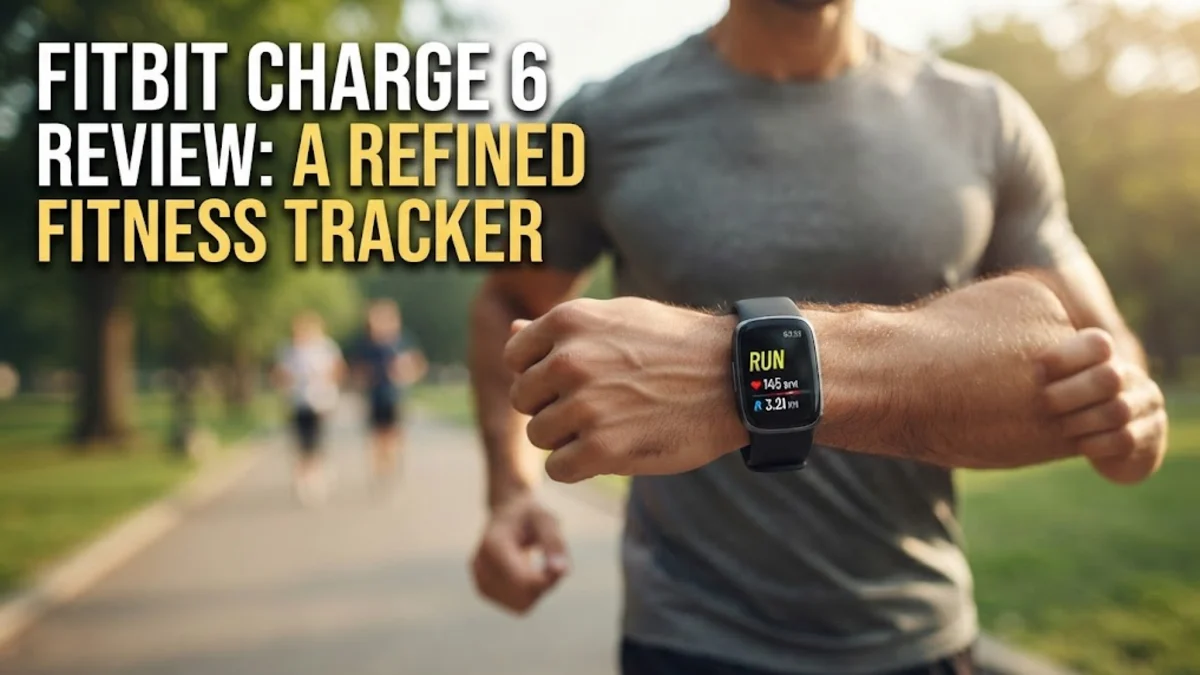
Overview
In the modern landscape of wearable technology, the Fitbit Charge 6 occupies a highly strategic middle ground. It serves as a bridge for those who have outgrown basic step counting but are not yet ready for the complexity and aesthetic footprint of a full-scale touchscreen smartwatch. By focusing heavily on internal biometric sensors and seamless data synchronization with the Fitbit ecosystem, this device attempts to be the ultimate companion for the health-conscious user. Its design philosophy centers on discretion; it is intended to fade into the background of your life while quietly accumulating the data points that matter for your long-term cardiovascular and metabolic health.
For many users, the primary appeal is the balance between intelligence and distraction-free operation. Unlike an Apple Watch or a Galaxy Watch, which can feel like an extension of your smartphone with constant pings and email notifications, the Charge 6 acts as a silent observer. It is specifically engineered to provide actionable health intelligence without requiring you to engage with an interface for prolonged periods, which helps in maintaining focus during both the workday and intense training sessions.
Design and Build
The exterior of the Charge 6 is a masterclass in minimalism. Constructed with an aluminum housing and a durable, flexible silicone strap, the device is lightweight enough to be forgotten during sleep, which is critical for accurate nocturnal metrics like resting heart rate and blood oxygen variation. The display is a high-contrast AMOLED panel, which significantly improves visibility in challenging lighting conditions compared to older monochrome or LCD panels. This ensures that you can check your progress in the middle of a midday run under direct sunlight without squinting.
One of the most praised design choices in this generation is the reintroduction of the haptic side button. In previous iterations, relying entirely on touch gestures could be frustrating when hands were sweaty during a high-intensity workout or when wearing gloves. The tactile feedback provided by the button creates a sense of reliability and control, making it much easier to navigate through menus or start a timed exercise. The buckle-style closure is secure, ensuring that the device does not slip during vigorous activity, and the low profile ensures that it fits comfortably under tight-fitting long sleeves or fitness gear.
Key Features and Performance
When diving into the performance metrics, the heart rate sensor is the star of the show. Utilizing an advanced optical configuration and proprietary machine learning algorithms, the Charge 6 provides heart rate readings that are remarkably close to what you would expect from a dedicated chest strap during steady-state cardio. This accuracy is paramount because almost every other metric—including calorie burn estimates and your cardio fitness score—is derived from this baseline. Furthermore, the inclusion of an ECG app allows users to perform spot checks for atrial fibrillation, offering a degree of clinical-grade insight that was once reserved for much more expensive medical devices.
The EDA (Electrodynamic Activity) sensor is another critical tool, providing a way to quantify physiological stress levels. By monitoring microscopic changes in skin conductance, the device helps users recognize when their body is under strain, even if they do not feel consciously stressed. When this is combined with the Sleep Score, you gain a holistic view of your recovery status. If your stress levels remain elevated while your sleep quality drops, the app can help you make informed decisions about whether to push through a workout or prioritize rest. Additionally, the integration of Google Maps and Google Wallet is a quality-of-life upgrade. Having turn-by-turn directions vibrating on your wrist is a game changer for urban runners and cyclists, and being able to pay for a post-workout drink with just a flick of the wrist eliminates the need to carry a bulky wallet.
Who It Is For (and Who Should Skip It)
This tracker is specifically designed for the individual who values data precision over media consumption. If you are training for a 5K, monitoring your heart rate for longevity, or trying to understand how your diet and sleep affect your overall vitality, the Charge 6 is perfectly tailored to your needs. It is an excellent choice for users who want to stay connected to notifications without becoming overwhelmed by them.
Conversely, you should skip this device if you expect the features of a traditional smartphone substitute. If you need to dictate voice notes, respond to complex emails, download maps for offline use, or install a wide array of third-party applications, the Charge 6 will feel restrictive. Its small display, while beautiful, is objectively insufficient for heavy text consumption or complex navigation tasks. If you prioritize aesthetics and custom watch faces over biometric utility, a larger, more style-focused smartwatch would be a better investment.
Alternatives Worth Considering
Choosing the right wearable often comes down to ecosystem compatibility. If you are deeply integrated into the Garmin ecosystem, the Garmin Vivosmart 5 offers a familiar interface with exceptional sports-specific tracking metrics, though it lacks the vibrant AMOLED screen found on the Fitbit. The Xiaomi Smart Band 9 presents a compelling value proposition; it offers similar tracking capabilities at a significantly lower price point, making it the preferred choice for those who are highly price-sensitive and do not mind a less polished app experience. Finally, the Samsung Galaxy Fit 3 is a formidable rival for Android users, particularly those who already own a Samsung smartphone, as the interoperability features between those two devices are second to none, providing a more cohesive smart-experience than the Fitbit.
Final Verdict
The Fitbit Charge 6 represents a mature, refined point in the evolution of the fitness tracker. It succeeds because it refuses to try and be a miniature phone, opting instead to master the fundamentals of health monitoring and basic connectivity. Its data accuracy, particularly regarding heart rate, is reliable enough for casual athletes and health enthusiasts alike. While the behind-the-paywall nature of some long-term data insights may be a disadvantage for some users, the out-of-the-box experience remains robust. Ultimately, it is a high-value tool for anyone looking to bridge the gap between human intuition and data-driven wellness.