Overview
In a world where wearables seem to be growing larger and more complex by the day, the Fitbit Inspire 3 carves out a vital space by choosing simplicity. It is purposefully designed for users who want health insights without the distraction of a high-powered wrist computer. Unlike bulkier smartwatches that compete for your attention with emails, social media notifications, and apps, the Inspire 3 functions primarily as a background health companion. This device is meant to be worn day and night, providing a continuous stream of data regarding your movement, heart rate, and sleep quality.
When you consider the current landscape of wearable technology in 2026, many users have expressed a form of 'tech fatigue.' The Inspire 3 addresses this directly. It is not trying to be a smartphone for your wrist; it is trying to be a wellness coach that happens to be small enough that you forget you are wearing it. This makes it an ideal entry point for individuals who are brand new to fitness tracking, as well as for those who have previously found traditional smartwatches to be too intrusive or physically cumbersome.
Design and Build
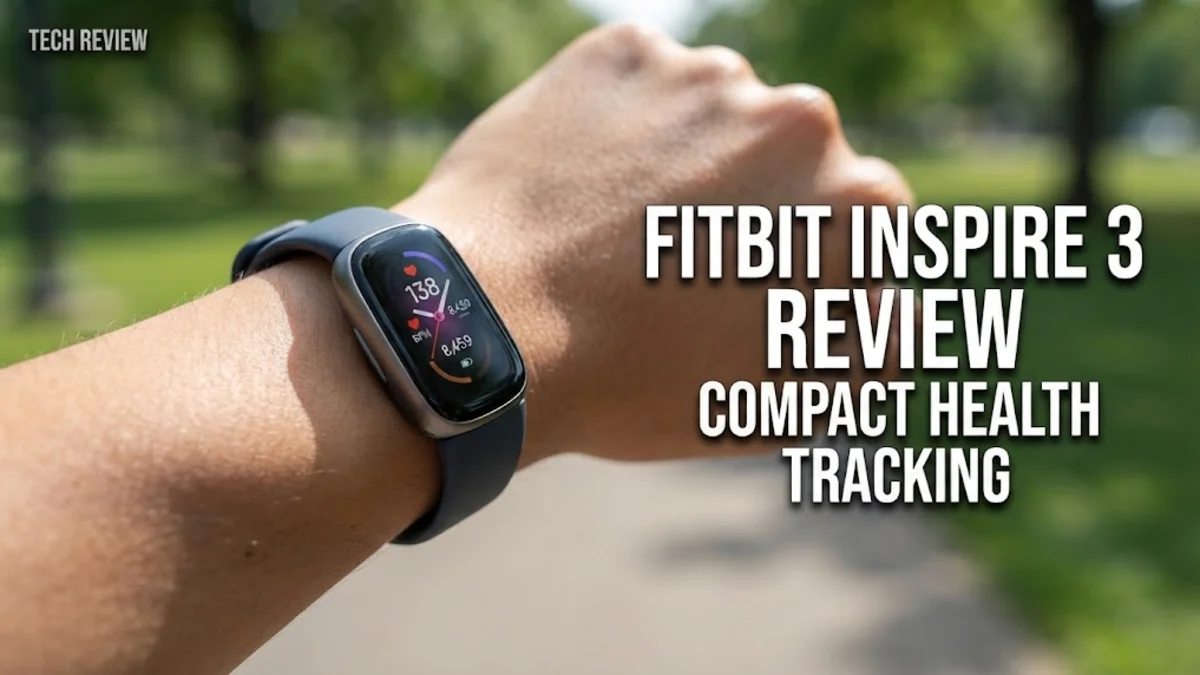
The design philosophy of the Inspire 3 centers on ergonomic efficiency. The housing is incredibly slim, constructed from lightweight, durable plastic that does not drag on your wrist during high-intensity intervals or while you are typing at a desk. The inclusion of a vibrant AMOLED touchscreen is a massive leap forward for this product line compared to older, monochrome predecessors. The colors are punchy, the blacks are deep, and the resolution is sharp enough that checking your step count or checking a message, while limited in real estate, remains clear and easy to read.
The strap system is equally well-considered. Out of the box, it comes with a soft silicone band that is skin-friendly, easy to clean, and resistant to the sweat and grime of daily workouts. Because of its 50-meter water resistance, the Inspire 3 is truly 'set it and forget it' technology. You can transition from a morning swim to a hot shower, and then head directly to a work meeting without feeling like your wearable is out of place. The lack of a bulky bezel or protruding physical buttons gives it a streamlined profile that fits under formal wear just as easily as it sits alongside athletic gear. The screen wake-up gesture is responsive, though some users find that it takes a day or two to get used to the specific sensitivity of the screen-tap wake mechanism.
Key Features and Performance
The core performance of the Inspire 3 is built around the Fitbit app ecosystem, which remains one of the most user-friendly platforms on the market. The heart rate sensor is consistently accurate for resting, walking, and steady-state cardiovascular activity. While it may not capture the precision of a chest-strap monitor during high-intensity interval training, for the vast majority of users, it provides excellent baseline metrics. The device tracks heart rate 24/7, enabling a deeper look into your cardiovascular health, including resting heart rate trends and heart rate variability (HRV), which is a crucial indicator of how well your nervous system is recovering.
Sleep tracking is arguably where this device shines brightest. The Inspire 3 automatically detects your sleep stages—light, deep, and REM—and combines this with your blood oxygen saturation (SpO2) and skin temperature variations to provide a sleep score. This isn't just vanity data; the app offers practical guidance on how to improve your sleep habits. Furthermore, the Daily Readiness Score is a transformative feature for those who struggle with balancing activity and recovery. By synthesizing your recent sleep quality, heart rate variability, and historical activity levels, the tracker tells you whether to push your limits or take an active recovery day. This prevents burnout and overtraining, making the device a smart partner for your physical well-being.
Battery life is the unsung hero of the Inspire 3 experience. While most modern smartwatches demand a nightly charging routine, the Inspire 3 can typically last up to ten full days on a single charge. In practice, this means you can actually track your sleep every night without worrying that the device will die on your wrist. When you finally do need to top it off, the magnetic charging cable clips on securely and refills the battery relatively quickly, usually taking about two hours from empty to full capacity.
Who It Is For (and Who Should Skip It)
This device is explicitly designed for the 'wellness-first' consumer. If your primary goals are to stay active, improve your sleep hygiene, manage stress levels, and perhaps lose weight, the Inspire 3 provides all the metrics you need without the technical complexity of higher-end watches. It is particularly great for teenagers, seniors, or professionals who value a distraction-free experience. If you are constantly overwhelmed by your smartphone notifications, the limited nature of the Inspire 3’s notifications might actually be a feature you appreciate, as it only pushes the most essential alerts to your wrist.
Conversely, you should skip this device if your identity is tied to specific athletic performance data. Competitive runners, cyclists, and triathletes will likely find the lack of integrated GPS a significant barrier. Because the device relies on 'Connected GPS' (using your phone's sensors), you must have your smartphone on you to track your pace and route accurately. For a runner who wants to hit the road unencumbered by a phone, this is a dealbreaker. Similarly, if you are looking for an extension of your smartphone that allows you to pay for coffee, install third-party apps, or take calls, this is not the right tool. It is not an extension of the phone; it is a separate, dedicated monitor for your body.
Alternatives Worth Considering
When shopping for a tracker, it is helpful to weigh the Inspire 3 against its main competitors. The Garmin Forerunner 55, while more expensive and physically larger, offers built-in GPS and a much deeper set of training analysis tools that are indispensable for distance athletes. If your motivation is specifically running improvement, the Garmin is the superior choice. The Samsung Galaxy Fit 3 is a direct competitor that offers a larger display area, which is noticeably better for reading text notifications. It feels more like a miniature phone, which may be a pro or a con depending on your preference. Finally, the Amazfit Band 7 brings an incredible battery life and a larger screen to the table at a very competitive price point, though the Fitbit software ecosystem is generally considered more refined and reliable for long-term health trending.
Final Verdict
The Fitbit Inspire 3 is a testament to the idea that sometimes less is more. By stripping away the unnecessary features that often complicate modern smartwatches, Fitbit has produced a focused, reliable tool for health tracking. It does not try to replace your phone, nor does it try to serve as a high-end sports computer. Instead, it offers a set-it-and-forget-it experience that helps you make sense of your daily wellness habits. With a week-plus of battery life, accurate sleep tracking, and a bright, modern display, it hits the essential requirements for the vast majority of consumers who simply want to lead a healthier life.