Overview
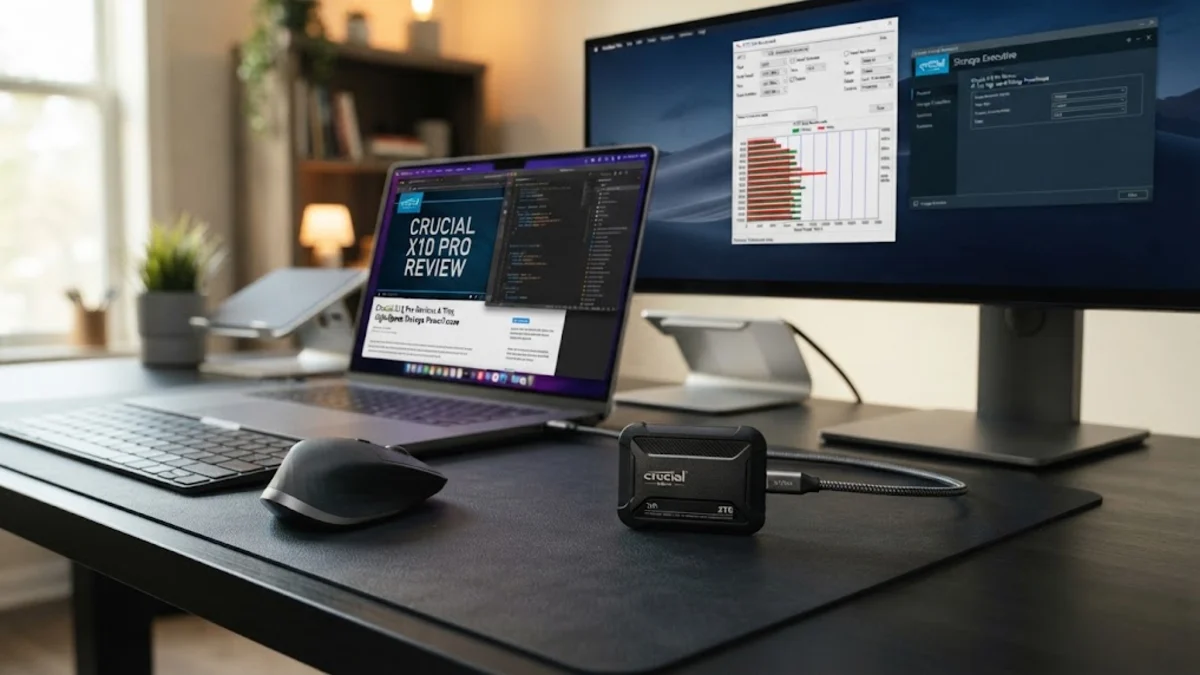
In the rapidly evolving world of external storage, the Crucial X10 Pro represents the current pinnacle of the brand's portable lineup. As files grow larger and workflows become more mobile, the demand for drives that can keep up with high-bitrate video and massive photo libraries has never been higher. The X10 Pro is designed specifically to address this need, positioning itself as a premium tool for professionals who cannot afford to wait for slow progress bars. Research indicates that this drive is not just a minor refresh of previous models but a significant leap in performance density, packing 20Gbps speeds into a chassis that is smaller than most credit cards.
Crucial, a brand under the Micron umbrella, has focused heavily on the 'Pro' designation here. This means the drive is built to handle sustained workloads that would cause cheaper, DRAM-less drives to buckle. When you are looking at the landscape of portable SSDs in 2026, you will find many options that claim high peak speeds, but few that maintain them during a 500GB file transfer. The X10 Pro aims to be that reliable workhorse, utilizing high-quality TLC NAND and a custom-tuned controller to ensure that your export from Premiere Pro or DaVinci Resolve stays fast from start to finish.
Design and Build
The first thing you notice about the Crucial X10 Pro is its diminutive size. Measuring approximately 65 x 50 mm, it is noticeably smaller than its primary competitors from Samsung and SanDisk. Despite its light weight, it feels incredibly dense and well-constructed. The chassis is made of anodized aluminum with a rubberized base, providing a tactile grip that prevents it from sliding off a laptop lid or a cramped airplane tray table. The gray finish is professional and resists fingerprints, which is a welcome change from the glossy plastics found on entry-level drives.
Durability is a core pillar of the X10 Pro's design. It carries an IP55 rating, which signifies that it is protected against dust ingress and low-pressure water jets. While you should not take it for a swim, it will easily survive a spilled coffee or a sudden rainstorm during an outdoor shoot. Furthermore, the manufacturer states it can withstand drops from up to two meters (6.5 feet) onto a carpeted floor. A particularly thoughtful design touch is the integrated lanyard hole, which also houses a small, recessed LED activity light. This light is bright enough to be seen but not so distracting that it would bother you in a dark editing suite.
Key Features and Performance
Performance is where the Crucial X10 Pro truly distinguishes itself, provided you have the right hardware to support it. It utilizes the USB 3.2 Gen 2x2 interface, which allows for theoretical maximum speeds of 20Gbps. In real-world research and expert testing, this translates to sequential read speeds of up to 2,100 MB/s and write speeds of up to 2,000 MB/s. For photographers working with high-resolution RAW files, this speed allows for near-instantaneous thumbnail generation and seamless scrolling through thousands of images in Adobe Lightroom.
However, it is vital to understand the hardware requirements for these speeds. USB 3.2 Gen 2x2 is common on many modern Windows motherboards and high-end laptops, but it remains a rarity in the Apple ecosystem. Even the latest Macs typically support Thunderbolt or USB 4, which often defaults to 10Gbps when connected to a Gen 2x2 drive unless a specific bridge chip is used. If you are a Mac user, you will likely see speeds capped around 1,000 MB/s. While still very fast, it means you aren't utilizing the full potential of the 'X10' hardware. For those on compatible Windows machines, the performance is transformative, nearly doubling the speed of standard 10Gbps portable SSDs.
Beyond peak sequential speeds, the X10 Pro handles random read/write tasks and sustained loads impressively well. Unlike many portable drives that use a large SLC cache that eventually runs out, the X10 Pro maintains a high performance floor. This is critical for users who edit video directly off the drive, as it prevents dropped frames during playback. The aluminum housing also serves as an effective heat sink; while the drive can get warm to the touch during a 1TB transfer, it rarely reaches temperatures that trigger thermal throttling, ensuring your transfer times remain predictable.
Who It Is For (and Who Should Skip It)
The Crucial X10 Pro is primarily aimed at the 'prosumer' and professional market. If you are a wedding photographer, a travel vlogger, or a content creator who frequently moves between different workstations, the combination of pocketable size and 2,000 MB/s speeds is a game-changer. It is also an excellent choice for gamers who want to expand their library on a handheld console like a Steam Deck or a gaming laptop, as the fast load times mimic internal NVMe storage closely.
Conversely, if you are looking for a drive simply to back up your family photos once a month or to store documents, the X10 Pro is likely overkill. You would be better served by the more affordable Crucial X9 or a similar 10Gbps drive, which offers the same physical footprint but at a lower price point. Furthermore, as mentioned previously, if you are an exclusive Mac user and do not own any Windows hardware with Gen 2x2 ports, you are paying for speed potential that you cannot currently access. In that scenario, a dedicated Thunderbolt drive or a more affordable 10Gbps SSD would be a more logical financial decision.
Alternatives Worth Considering
When shopping for a high-end portable SSD, the SanDisk Extreme Pro V2 is the most direct competitor. It offers similar 2,000 MB/s speeds and a rugged design. However, the Crucial X10 Pro is significantly smaller and, according to many user reports, tends to run slightly cooler during long operations. The SanDisk does have a larger carabiner loop which some might prefer for securing to the outside of a camera bag.
Another strong contender is the Samsung T7 Shield. While the T7 Shield is limited to 10Gbps (roughly 1,050 MB/s), it offers a more robust IP65 rating, making it slightly more 'weatherproof' than the Crucial. If you prioritize absolute durability over maximum speed, or if you are using a device that doesn't support 20Gbps anyway, the Samsung is a fantastic and often slightly cheaper alternative. Lastly, the Kingston XS2000 offers the same 20Gbps speeds in a very small form factor, but it lacks the premium aluminum feel and the more sophisticated thermal management found in the Crucial model.
Final Verdict
The Crucial X10 Pro is a masterclass in portable storage engineering. It successfully shrinks professional-grade performance into a device that can hide in a coin pocket. While the USB 3.2 Gen 2x2 interface is a double-edged sword due to its specific compatibility requirements, the drive remains a top-tier performer even when throttled by slower ports. Its build quality is exceptional, and its ability to maintain high speeds during sustained tasks sets it apart from the sea of mediocre external drives. For those who value their time and need a storage solution that can keep up with a demanding creative pace, the X10 Pro is one of the best investments you can make for your gear bag in 2026.