Overview
In the modern smart home ecosystem, the robot vacuum has evolved from a luxury novelty into a fundamental utility. The Roborock q7b positions itself as a cornerstone of this category, serving homeowners who demand high performance without the price point of an ultra-premium, self-emptying flagship model. By focusing on core cleaning metrics—specifically consistent suction power and efficient pathing logic—the q7b delivers a streamlined, effective experience designed to handle the daily accumulation of dust, pet hair, and tracked-in debris across a variety of floor types. Whether you are finally deciding to retire your aging manual vacuum or simply looking for an upgrade that actually understands the layout of your home, this unit prioritizes functional, reliable cleaning. It is a workhorse designed for those who value efficiency, precision mapping, and a clean living space without needing unnecessary, complex smart features that often bloat the price of modern appliances.
Design and Build
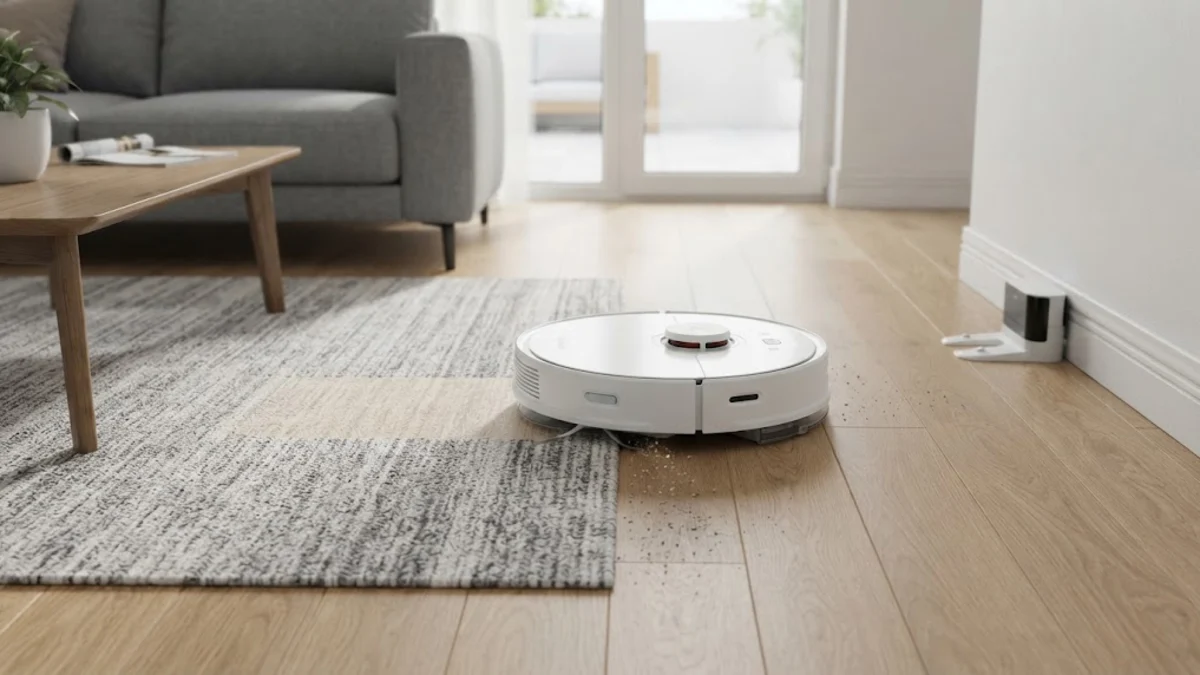
The aesthetic of the q7b follows a classic, low-profile circular silhouette, a proven design that maximizes maneuverability. Standing just a few inches tall, the unit glides effortlessly under sofas, bed frames, and low-clearance console tables where dust bunnies frequently thrive. Construction-wise, the build quality feels substantial, utilizing high-grade, durable plastics and a reinforced bumper system. This bumper is designed to withstand thousands of soft-touch collisions with baseboards, table legs, and door frames without leaving scuffs or damaging your furniture. The top-mounted laser navigation housing is remarkably sleek, keeping the robot's overall height low enough to clear most modern kitchen cabinetry kickboards. Maintenance is equally thoughtful; the dustbin is accessed through a wide top panel, allowing for a quick, mess-free removal and empty cycle that doesn't require tipping the entire device upside down.
Key Features and Performance
At the center of the q7b's cleaning prowess is its robust main brush system combined with high-static suction capabilities. Technical data suggests this combination is particularly lethal against fine particulates. On hard floor surfaces—such as hardwood, laminate, or tile—the brush pulls dust from the cracks, while the suction ensures no lingering debris remains. For households with carpeting, the machine features an intelligent auto-boost function. Once the onboard ultrasonic sensors detect a surface tension change indicating carpet, the motor ramps up to maximum power, ensuring that dust embedded deep within carpet fibers is agitated and extracted efficiently.
Navigation is where the q7b truly justifies its standing in the market. Utilizing LiDAR-based laser technology, the vacuum does not rely on random "bump-and-go" patterns. Instead, it generates a high-resolution map of your home during its maiden voyage. This mapping technology enables several power-user features. You can set up digital no-go zones via the mobile application, effectively "fencing off" fragile vases, cable-heavy workstations, or water bowls, preventing the robot from entering these zones. The app interface is lauded by many for its clarity, offering granular control over cleaning schedules, room-specific intensity settings, and the ability to view the cleaning progress in real-time. Even during evening cycles, the LiDAR system functions effectively in low-light conditions, ensuring your floors are prepped for the morning without the need for bright ambient lighting.
However, it is vital for potential buyers to understand the trade-offs of this specific model. The q7b does not utilize the advanced, camera-based object recognition found in the company's more expensive "MaxV" or "Ultra" series. In practical terms, this means the robot does not "see" small, stray objects like shoelaces, charging cables, or small toys as distinct entities to avoid. It will attempt to vacuum them. While the design prevents major tangles, it is still best practice to perform a quick floor sweep to ensure loose clutter is picked up. By keeping the floor clear of cables, you allow the robot to maintain a perfectly efficient path, maximizing battery life and cleaning speed.
Who It Is For (and Who Should Skip It)
This vacuum is ideally suited for the modern, busy household. If you are a professional, a pet owner, or a parent who finds that manual vacuuming is a constant, exhausting chore, the q7b is designed to automate that burden. It works perfectly for those with standard floor layouts where the robot can navigate from room to room without excessive "trap" points. If you are already invested in the Roborock smart ecosystem, this device integrates seamlessly with existing home app configurations, providing a unified management experience for your cleaning schedule.
On the other hand, there are scenarios where this might not be the optimal fit. If your living space is frequently cluttered with small items, wires, and complex furniture arrangements, you might find yourself needing to clear the floor too often for the robot to operate in your absence. If you are specifically looking for a hybrid model that performs heavy-duty mopping, while the q7b is capable of wiping hard floors, it doesn't offer the deep-scrubbing capabilities of higher-end hybrid units. Lastly, those who suffer from severe allergies might find a self-emptying base model to be a more hygienic solution, as the manual emptying of the q7b bin, while simple, does expose the user to captured dust.
Alternatives Worth Considering
The market is competitive, and the q7b faces notable rivals. The iRobot Roomba j7 is often cited as a direct alternative for those who prioritize obstacle avoidance, as its camera-based system is explicitly trained to navigate around pet waste and common household clutter. The Eufy RoboVac X8 is another worthy contender, often highlighted for its unique dual-turbine suction technology, which provides significant power for deep-cleaning carpets. Comparing these options often comes down to weighing the specific value of advanced AI avoidance versus the proven, reliable LiDAR navigation and suction performance of the Roborock system. If you want the latest in obstacle intelligence, look toward the j7; if you want a reliable, laser-guided workhorse that excels in straight-line pathing and daily debris management, the q7b remains the more cost-effective choice.
Final Verdict
The Roborock q7b robot vacuum is a masterclass in the "less is more" philosophy. By omitting costly, experimental features and focusing exclusively on the core mission—cleaning floors reliably and navigating intelligently—Roborock has created a product that offers immense value to the average homeowner. It does not try to be an all-knowing robot; it tries to be a great vacuum. The suction performance is consistently rated highly by users, the mapping system is among the best in its tier, and the app support is top-tier. While it lacks high-end extras like camera-based object detection, the trade-off in price makes it significantly more accessible. For those looking for a dependable daily cleaner that can be set and forgotten, the q7b is a robust, well-engineered, and highly recommended option for the modern home.