Overview
Entering the world of home espresso can be daunting, filled with jargon about extraction times, grind settings, and water pressure. The KitchenAid kf2 espresso machine positions itself as a bridge between the convenience of automated capsule machines and the complexity of professional-grade gear. For the average home consumer, the goal is simple: a cafe-quality shot without the need for a degree in engineering or a commercial-sized kitchen layout. Research into the kf2 suggests it targets users who value the aesthetic consistency of the KitchenAid ecosystem while demanding a functional, reliable daily brewer. It represents a commitment to the ritual of coffee-making that is approachable enough for a Tuesday morning but robust enough to impress guests.
Design and Build
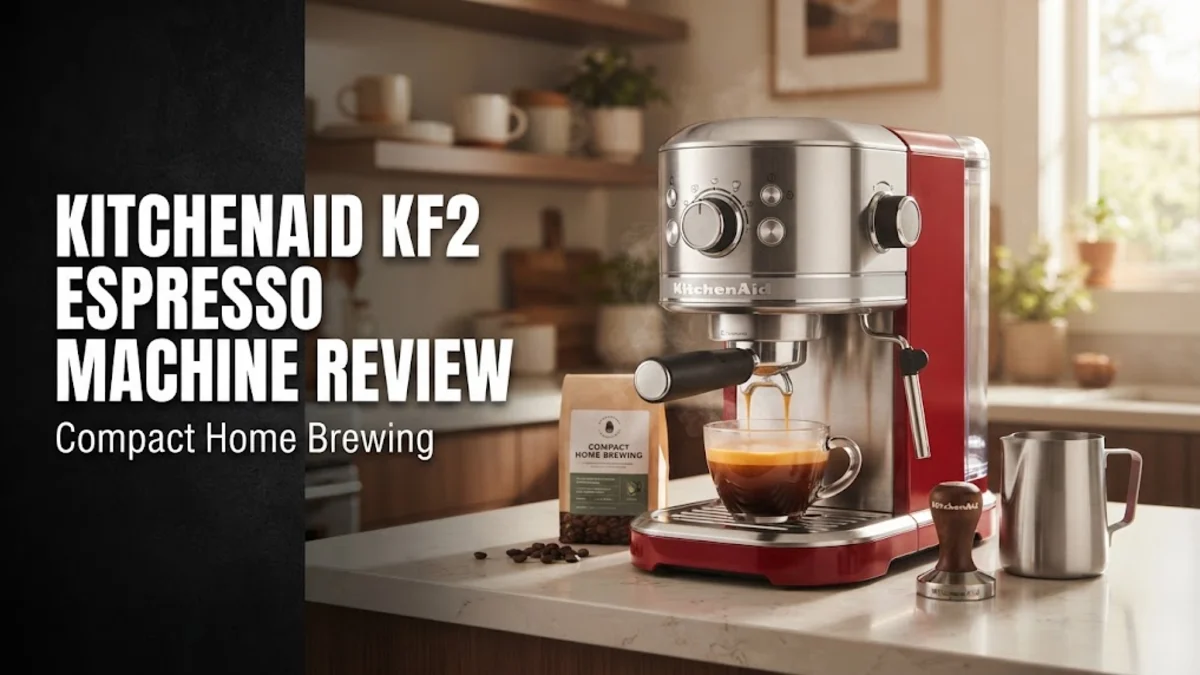
The build quality of the kf2 is one of its most defining characteristics. Unlike many entry-level espresso machines that rely heavily on lightweight, painted plastics, the kf2 utilizes a significant amount of metal in its housing. This is not merely an aesthetic choice; the added mass provides essential structural stability, meaning the machine does not slide or vibrate during the locked-in portafilter insertion process. When you engage the portafilter into the group head, the machine feels grounded, which is a major point of relief for users transitioning from cheaper, plasticky alternatives. The footprint is thoughtfully designed to fit under standard kitchen cabinets without creating a cluttered environment, leaving enough room for a separate burr grinder, which is a necessary accessory for this unit.
Key Features and Performance
At the heart of the kf2 is a focus on thermal stability. The internal heating architecture is designed to reach the ideal extraction temperature rapidly, a feature that frequent users praise for reducing the 'wait time' that plagues older boiler-based systems. A key performance advantage here is the consistency of the water delivery. While it lacks the high-end pressure-profiling capabilities found on units costing twice as much, the kf2 maintains a steady pressure curve throughout the extraction, provided your grind size is dialed in correctly. The portafilter is of a standard 58mm size, which is significant because it allows the user to explore aftermarket accessories like precision baskets or different tamper weights, allowing for a level of growth that many other entry-level machines lack. Regarding the steam wand, it is a multi-directional tool designed for texturing milk. While the steam pressure may not be as aggressive as a commercial machine, it is well-suited for home use, allowing you to gradually develop the technique required for micro-foam, making it a reliable training tool for budding latte art enthusiasts.
Who It Is For (and Who Should Skip It)
The kf2 is the ideal machine for the home barista who is tired of 'good enough' coffee but isn't ready to spend hours dialing in variables before their first sip of caffeine. It serves the 'intermediate' demographic perfectly: people who want to understand the basics of extraction, enjoy the process of steaming milk, and appreciate a design that looks beautiful in a modern kitchen. Conversely, this machine is likely not for the person who demands absolute manual control. If you are an enthusiast who wants to adjust the pump pressure, swap out pump springs, or install a PID controller for extreme thermal precision, you will find the kf2 restrictive. It is a 'set and forget' style appliance that prioritizes day-to-day reliability over technical tweakability.
Real-World Usage Scenarios
In a real-world home environment, the kf2 excels in efficiency. For a morning household where multiple drinks are needed in quick succession, the fast recovery time between the shot pull and the steam transition is a clear advantage. Many users note that the drip tray design is particularly thoughtful, as it is large enough to handle minor spills and excess water from purging the group head without requiring constant emptying. However, the machine's requirement for a separate grinder is a trade-off that buyers must anticipate. While this allows you to upgrade your grinder later to improve your shot quality, it does mean that the initial setup involves a larger physical footprint on your counter than an all-in-one machine like the Breville Barista Express.
Comparison to Market Rivals
When stacking the kf2 against the Breville Barista Express, the primary differentiator is the grinder. The Breville comes with an integrated grinder, which saves space, whereas the KitchenAid kf2 requires an external unit, allowing for more specific grinder quality choices. Compared to the Gaggia Classic Pro, which is essentially a blank canvas for modifications, the kf2 is a more 'finished' product out of the box, requiring no aftermarket tuning to achieve a great shot. The De'Longhi La Specialista sits in a similar tier, but many users find the KitchenAid design language to be more durable and less prone to the mechanical wear-and-tear associated with complex, sensor-heavy automatic systems.
Final Verdict
Ultimately, the KitchenAid kf2 espresso machine hits a difficult 'sweet spot.' It offers enough performance to elevate your home coffee game beyond the basics while maintaining a level of simplicity that ensures it gets used every single day rather than collecting dust. It is not designed to be the ultimate espresso laboratory, but rather a functional, durable, and attractive tool that fits seamlessly into a modern, busy lifestyle. By focusing on essential quality, thermal reliability, and build integrity, KitchenAid has created a machine that respects the user's time and provides consistently high-quality coffee. If you prioritize reliability and design as much as you do the quality of your morning cup, the kf2 is a contender that warrants serious consideration for your kitchen workspace.