Overview
The Huawei Smartwatch 5 enters a highly saturated wearable market at a pivotal moment in 2026. As consumers move away from devices that require daily charging, Huawei has positioned this model as a refined evolution of their long-standing hardware design philosophy. It is not merely an incremental update; it is a holistic approach to marrying a classic timepiece aesthetic with the deep, data-driven insights expected of modern smart devices. By focusing on longevity and build quality, the Huawei Smartwatch 5 aims to solve the 'charging fatigue' that plagues many flagship wearables while maintaining a sleek, unobtrusive profile on the wrist.
For the average user, the device serves three primary functions: an extension of your smartphone's notification system, a comprehensive health monitor, and a fashion accessory. Unlike many budget-focused trackers that lean into plastic, heavy silicone, or overly sporty looks, the Smartwatch 5 leans into a more professional, versatile design language. This makes it suitable for a boardroom meeting at 9 AM and a high-intensity interval training session at 6 PM. The device is built for people who want one watch that can do it all without looking like a piece of clinical tech.
Design and Build
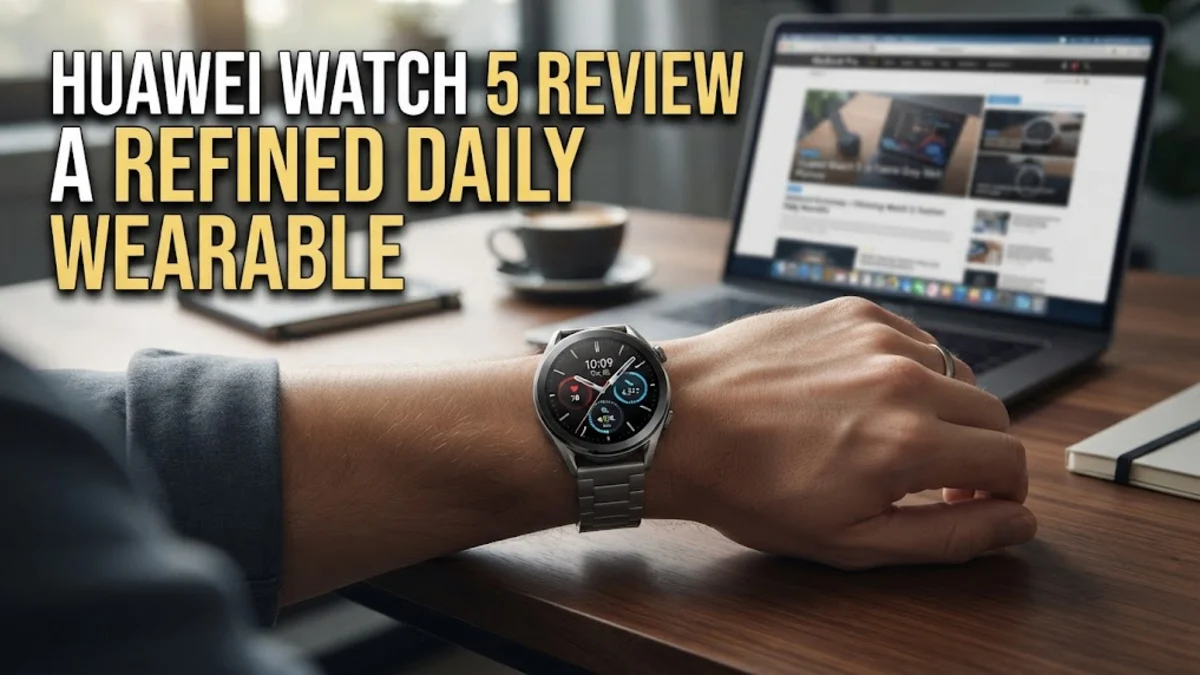
The build quality is arguably where the Huawei Smartwatch 5 pulls ahead of its mid-range competitors. While many alternatives in the $250-$350 range utilize lightweight composites or cheaper aluminum alloys, the Smartwatch 5 utilizes a refined metallic casing that provides a premium, weighted feel. The screen is protected by a high-grade, scratch-resistant glass that curves gently toward the edges of the bezel, minimizing the visual footprint of the screen border. This creates an immersive, seamless look that is rarely found outside of significantly more expensive luxury wearables.
Ergonomics play a huge role in the daily experience of the Smartwatch 5. The device is notably slim, ensuring that it does not catch on cuffs or sleeves during your daily commute. The physical crown is another triumph; it provides crisp, haptic feedback when scrolling through menus or lists, which is a significant improvement over touch-only interfaces that can feel imprecise when your fingers are sweaty after a workout. Huawei has also maintained standard lug widths, a crucial detail that ensures you are not locked into proprietary strap ecosystems. If you prefer a leather strap for work or a durable nylon band for hiking, the mechanism makes the switch nearly instantaneous.
Key Features and Performance
Performance on the Huawei Smartwatch 5 is defined by its efficiency. Under the hood, the operating system is optimized to manage background tasks without taxing the battery, which is a major advantage over power-hungry alternatives. When navigating the user interface, the response time is immediate, and animations remain fluid even when multiple health sensors are collecting data in the background. This is a critical factor for users who rely on their watch for quick glances at metrics during a run or a commute.
The health suite on this model is significantly more robust than previous iterations. You get 24/7 heart rate monitoring, consistent blood oxygen tracking, and advanced sleep stage analysis. What sets it apart is the clarity of the data provided through the companion app. It does not just dump raw numbers on you; it synthesizes them into actionable trends. For instance, the stress monitoring feature identifies patterns in your daily routine, suggesting breathing exercises when your heart rate variability indicates elevated tension. For fitness tracking, the GPS performance is robust and locks onto signals quickly, which is a common pain point for competitors at lower price points.
Battery life is the standout feature. While most premium smartwatches demand a place on a charger every 24 hours, the Smartwatch 5 routinely hits five full days of moderate use. This endurance changes how you interact with the watch—you no longer have to plan your life around charging cycles or fear the device dying halfway through a long weekend. When you do need to charge, the magnetic cradle works efficiently, though it is a proprietary component that you will need to keep track of when traveling.
Who It Is For (and Who Should Skip It)
The Huawei Smartwatch 5 is tailor-made for the professional who values aesthetics as much as performance. It is for the person who wants to track their steps, monitor their sleep quality, and receive timely notifications without having a glowing neon-sport device on their wrist. If you are an Android user, this watch feels at home, offering a deep integration with your phone's notification system and seamless sync speeds for your fitness logs. It is particularly well-suited for someone who exercises consistently but does not require the hyper-specialized, multi-day tracking modes found on $600 specialized expedition watches.
However, you should skip this device if you are fully committed to the Apple ecosystem. While it does function, the lack of full, native integration with Apple Health or the seamless handoff between iPhone apps means you are essentially using a limited version of the device. Additionally, if your goal is to download a massive library of third-party apps, games, or standalone communication software, the limited app ecosystem on this watch may feel restrictive compared to platforms like WatchOS or WearOS. It is a tool for fitness and notifications, not a computer for your wrist.
Alternatives Worth Considering
The competitive landscape is fierce. The Samsung Galaxy Watch 8 remains the primary choice for users who want the widest possible app ecosystem and deep, native integration with Android phones, though it sacrifices significant battery life to achieve this. If your primary focus is solely on distance running and race performance, the Garmin Forerunner 165 is unbeatable. It offers superior recovery data and physical buttons that are more reliable in extreme weather, though it lacks the premium build materials and versatile style of the Huawei device. For iPhone users, the Apple Watch 11 remains the default choice due to its unmatched integration with iOS, even if its battery life is the shortest of the group.
Final Verdict
Ultimately, the Huawei Smartwatch 5 succeeds by doing the basics better than almost anyone else. It is a mature, polished piece of hardware that focuses on longevity and comfort rather than gimmicky software features. While it is not the most 'smart' device in the sense of being a wrist-worn computer, it is a superior wearable for tracking health and keeping connected. The battery life is its greatest asset, providing a level of freedom that makes it a joy to use daily. If you are an Android user looking for a balance of class, data, and stamina, this is a top-tier recommendation.