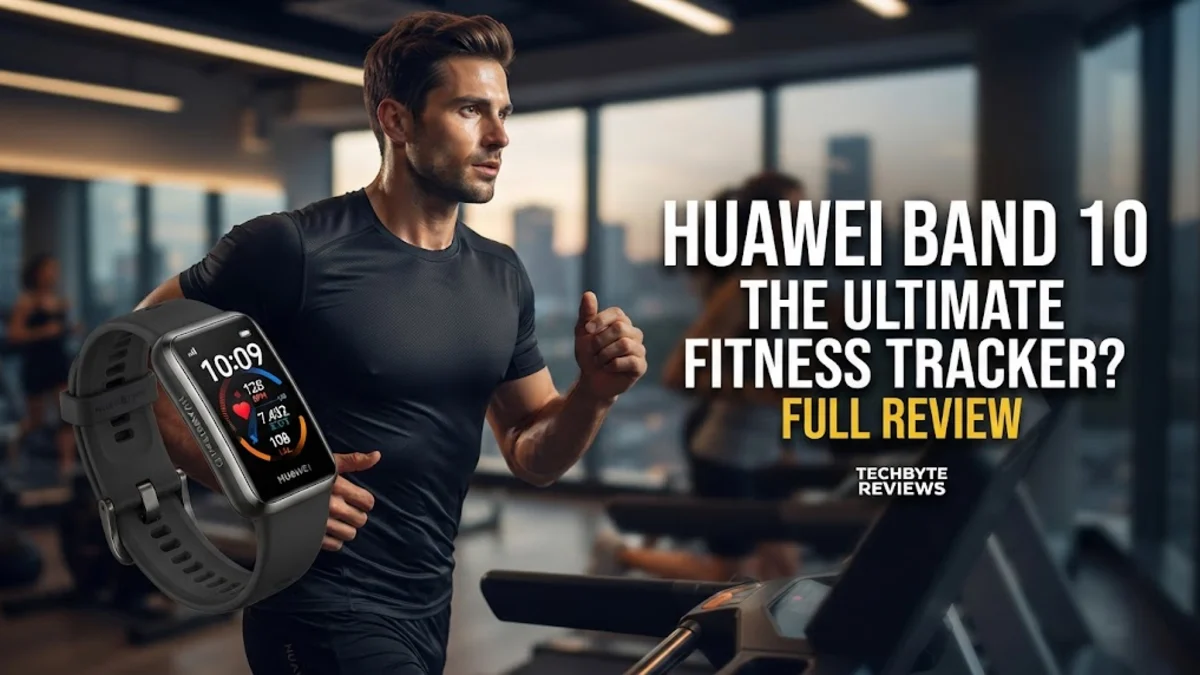
Overview
In the rapidly evolving landscape of wearables, the Huawei Band 10 positions itself as a specialized tool for health enthusiasts who prefer minimalism over the complexity of full-featured smartwatches. Released as a refined iteration of its predecessors, it aims to solve the problem of constant charging and heavy, cumbersome hardware. The device functions as a dedicated health assistant that operates quietly in the background of your life. Whether you are aiming to track your daily steps, monitor your sleep cycles, or simply keep a pulse on your resting heart rate, this tracker is designed to be the bridge between passive activity tracking and active lifestyle management. It avoids the temptation of cramming too many features that would ultimately hurt the user experience, focusing instead on high-quality sensors and a streamlined interface.
For many consumers today, the appeal of a device like the Huawei Band 10 lies in its simplicity. Smartwatches often demand attention with frequent notifications and complex navigation, which can lead to digital fatigue. The Band 10, however, is built with a different philosophy: it provides information when you need it and stays unobtrusive when you don't. By prioritizing longevity and comfort, Huawei has created a gadget that caters to professionals, students, and active individuals alike who want meaningful data without the burden of constant management. It represents a pragmatic approach to personal health technology that prioritizes consistency over feature density.
Design and Build
The design philosophy of the Huawei Band 10 is rooted in ergonomics and daily wearability. The device is built around an ultra-slim, lightweight chassis that virtually disappears on your wrist after a few minutes of use. This is a critical factor for a tracker that is designed to be worn while sleeping to collect recovery data. The housing itself uses high-quality, lightweight materials that are both skin-friendly and durable enough to withstand the rigors of an active lifestyle. The device arrives with a soft, hypoallergenic silicone strap that allows the skin to breathe during exercise, preventing the irritation that often accompanies cheaper or poorly designed wearable materials.
Perhaps most importantly, the screen is an AMOLED panel that offers deep blacks and vibrant colors, ensuring that your health metrics are legible even in challenging lighting conditions, such as high-noon outdoor sunlight. The touch interface is highly responsive, with a glass-to-body ratio that feels premium for its price bracket. Unlike bulkier smartwatches that can catch on jacket sleeves or interfere with lifting weights, the streamlined profile of the Band 10 ensures that it remains tucked away. This focus on form factor makes it an ideal choice for people who have avoided wearables in the past because they found traditional watches too cumbersome or aesthetically unappealing in formal work environments.
Key Features and Performance
The performance of the Huawei Band 10 is defined by the accuracy and reliability of its health monitoring sensors. It utilizes advanced optical sensors to track your heart rate in real-time, providing consistent data even during high-intensity interval training or steady-state cardio. The SpO2 sensor adds another layer of health insight, helping users monitor blood oxygen levels, which is particularly relevant for those training at high altitudes or just interested in a deeper understanding of their respiratory health.
Sleep tracking is another standout feature, utilizing sophisticated algorithms to break down your sleep stages—including deep, light, and REM sleep—along with breathing quality metrics. This data is processed through the companion app, which synthesizes the numbers into actionable insights. You aren't just given a total sleep time; you are given an assessment of your recovery, allowing you to adjust your routines accordingly. The device also supports a wide array of workout modes, covering everything from running and swimming to cycling and yoga. Each mode is optimized to track relevant metrics specific to the exercise type, such as lap pacing for swimmers or cadence for cyclists. The 5ATM water resistance rating further ensures that you can safely take the device into the pool or wear it in the rain without a second thought.
Battery life is the undeniable champion feature of this tracker. While many smartwatches struggle to make it through 48 hours, the Huawei Band 10 can comfortably reach up to 14 days of use on a single charge under normal conditions. This level of endurance fundamentally changes how you interact with the product; you move from a mindset of daily charging rituals to simply forgetting that it needs to be powered up at all. When it does need a boost, the fast-charging capability ensures that you are back to full battery in less than an hour, minimizing any gap in your data collection.
Who It Is For (and Who Should Skip It)
The Huawei Band 10 is perfect for the demographic that values data precision over software bloat. If you are a busy professional or a student who needs a way to track basic fitness goals, improve your sleep hygiene, and stay on top of your daily steps without the distraction of a thousand notifications, this is the product for you. Its unobtrusive nature makes it a great "set it and forget it" device. It also suits those on a stricter budget who want the health benefits of a high-end wearable without the triple-digit investment.
However, you should skip this device if your primary goal is to use your wrist device as an extension of your smartphone. If you want to reply to text messages via a full keyboard, take phone calls directly from your wrist, or download third-party applications for task management, you will be disappointed. Furthermore, serious outdoor athletes who demand accurate GPS tracking without relying on a phone will find the lack of standalone GPS to be a significant limitation. While you can pair it with your phone's GPS for outdoor runs, this still requires you to carry the phone, which might be inconvenient for some runners.
Alternatives Worth Considering
Choosing a fitness tracker often involves looking at what trade-offs you are willing to make regarding the ecosystem. The Fitbit Inspire 3, for instance, offers a very polished software experience and superior community features, which can be highly motivating for people who thrive on social challenges, though it does come with a higher barrier to entry in terms of subscription costs for full insights. The Samsung Galaxy Fit3 is an excellent alternative if you are already deeply embedded in the Samsung ecosystem, as it offers a seamless integration with other Galaxy devices, including improved notification handling and a slightly broader display surface. The Xiaomi Smart Band 9, on the other hand, is the closest rival to the Huawei Band 10 in terms of the pure "bang for your buck" metric. It features an incredibly competitive price and a battery life that can sometimes exceed the Huawei, making it the choice for the most budget-conscious shoppers. You must decide whether you prioritize the specific interface design of the Huawei ecosystem or the potential social networking benefits of the Fitbit path.
Final Verdict
In conclusion, the Huawei Band 10 succeeds because it does not try to be everything for everyone. It is a focused, high-performing fitness tracker that respects the user's need for a tool that just works. By avoiding unnecessary complexity, it manages to provide a stable, long-lasting, and insightful health-tracking experience that serves as a solid foundation for any fitness journey. While the lack of independent GPS and restricted smart-app capabilities might be dealbreakers for a small segment of power users, the majority of the market will find that it hits the sweet spot between function and form. It is a reliable, high-value investment for anyone looking to bridge the gap between sedentary living and an active, monitored lifestyle.