Overview
In the expansive and sometimes overwhelming market of modern wearable technology, the Fitbit Inspire 3 carves out a specific niche: the device for people who want data, but do not want a wrist-worn computer. While high-end smartwatches aim to replace your phone, the Inspire 3 aims to simply document your life in the background. It is a minimalist health monitor that manages to pack substantial sensors into a slender chassis, serving as a gateway for those new to biometric tracking or for power users who want a secondary device for sleep and step counting while wearing a mechanical watch on the other wrist.
The current iteration of the Inspire series represents a mature point in Fitbit's design language. By focusing on the fundamentals—heart rate, activity, sleep, and stress—it avoids the pitfalls of "feature creep" that plague many larger watches. It is not trying to be a communication hub or a music player. Instead, it acts as a reliable, unobtrusive biometric logger that communicates seamlessly with the highly refined Fitbit smartphone application, which remains one of the best platforms for visualizing long-term health trends.
Design and Build
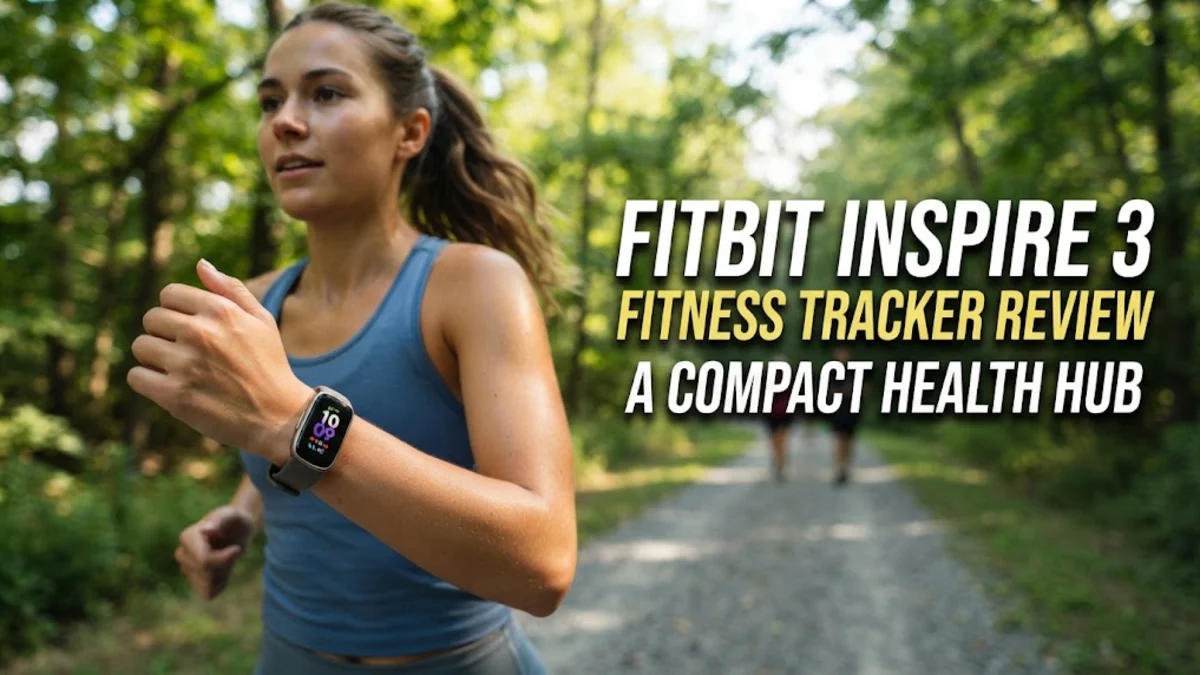
The aesthetic of the Fitbit Inspire 3 is defined by its subtlety. With its slim, pebble-like screen housed in a flexible silicone strap, the device avoids the "technological" look of larger watches. It is so low-profile that it can easily slide under a tight-fitting dress shirt or jacket sleeve, making it an appropriate choice for professional settings where a massive, backlit smartwatch might feel out of place.
The display is a crisp, vibrant AMOLED panel. This is a massive leap forward from the older grayscale OLED screens seen in previous generations. Color-coded zones for heart rate intensity and bright, clear iconography for steps and notifications make navigation simple even if you have never used a fitness tracker before. However, the trade-off for this elegant form factor is the screen size. The narrow width means that text is truncated frequently, and navigating the menu requires patience, as the interface relies on swipes and a single touch gesture rather than physical buttons. The chassis is durable, with a 50-meter water resistance rating that allows it to survive rigorous swimming sessions or just daily exposure in the shower without the need for constant caution.
Key Features and Performance
When diving into the technical performance, the heart rate sensor is the centerpiece. Fitbit has consistently refined its optical heart rate tracking, and in the Inspire 3, it offers reliable metrics for both resting heart rate and active exercise tracking. During steady-state cardio, such as jogging or brisk walking, the accuracy is comparable to many mid-range smartwatches. However, it is important to note that like all wrist-based sensors, it can struggle with high-intensity interval training or activities involving extreme wrist flexion, where accuracy may fluctuate slightly compared to a dedicated chest strap monitor.
The sleep tracking functionality is arguably the strongest value proposition here. The device uses heart rate and motion sensing to categorize your sleep into light, deep, and REM stages. In our research, we found that users appreciate the consistency of this data. The Sleep Score, which combines these metrics into a 0-100 scale, provides a tangible way to monitor how lifestyle changes impact your nighttime recovery. Additionally, the SpO2 sensor provides blood oxygen saturation readings, which can be useful for spotting trends in your respiratory health over time. For those struggling with daily anxiety or high-stress environments, the guided breathing exercises and stress management scores provide immediate feedback, helping users pause and recalibrate.
Battery life is the unsung hero of the Inspire 3. While many smartwatches demand a daily charger, the Inspire 3 routinely delivers a full 10 days of usage. This is a critical feature because it encourages 24/7 wear. If you have to take a watch off to charge it every night, you lose the ability to track sleep, which is the most important metric for most users. The charging cable is a proprietary magnetic pogo-pin design, which is sturdy and snaps into place with a satisfying click, though you should be careful not to lose it as it is not a standard USB-C connection.
Who It Is For (and Who Should Skip It)
This device is explicitly for the "health-first" crowd. If you are starting your fitness journey, training for your first 5K, or simply want to ensure you are getting enough sleep and walking enough throughout the workday, the Inspire 3 is a near-perfect companion. It is also an excellent option for the "data-curious" elderly user, as the interface is simplified and lacks the complexity of third-party app stores or complicated navigation menus.
You should consider skipping this model if you are a performance athlete who needs precise pace and mapping during long runs or bike rides. Because the Inspire 3 lacks an internal GPS, it must lean on your smartphone to map your route. This means you must carry your phone with you at all times during outdoor workouts. Furthermore, if you are a "power user" who wants to read full emails, reply to text messages with a QWERTY keyboard, or control smart home devices directly from your wrist, the Inspire 3 will inevitably feel too limited. It is a tracker, not a wearable smartphone surrogate.
Comparison and Competitive Landscape
When compared to its primary competition, the differences become clear. The Garmin Vivosmart 5 offers a more "data-heavy" approach, providing deeper metrics for athletes through the Garmin Connect app, but it lacks the vibrant color screen found on the Fitbit, making the interface feel dated. The Xiaomi Smart Band 8, while significantly cheaper, offers a similar form factor and even features like high-refresh-rate screens, but users often cite the software ecosystem as less intuitive and the long-term data tracking as less meaningful than Fitbit’s extensive, established community features.
The Inspire 3 sits in the "sweet spot" of the market. It manages to offer a premium software experience—clean, fast, and feature-rich—without the complexity of a smartwatch. It does not feel like a toy, nor does it feel like a professional athlete's tool. It feels like an everyday appliance that happens to be on your wrist.
Final Verdict
The Fitbit Inspire 3 is a masterful example of specialized design. It focuses on doing a few things extremely well rather than trying to do everything passably. By prioritizing battery life, comfort, and accurate sleep and step tracking, it meets the needs of 90% of casual users perfectly. While the lack of internal GPS and the small display size are genuine trade-offs, they are necessary sacrifices to achieve such a slim and unintrusive profile. In 2026, as wearable technology continues to bloat, the Inspire 3 stands out as a refreshing, focused, and reliable piece of technology that actually helps you live a healthier life rather than just keeping you glued to a screen.