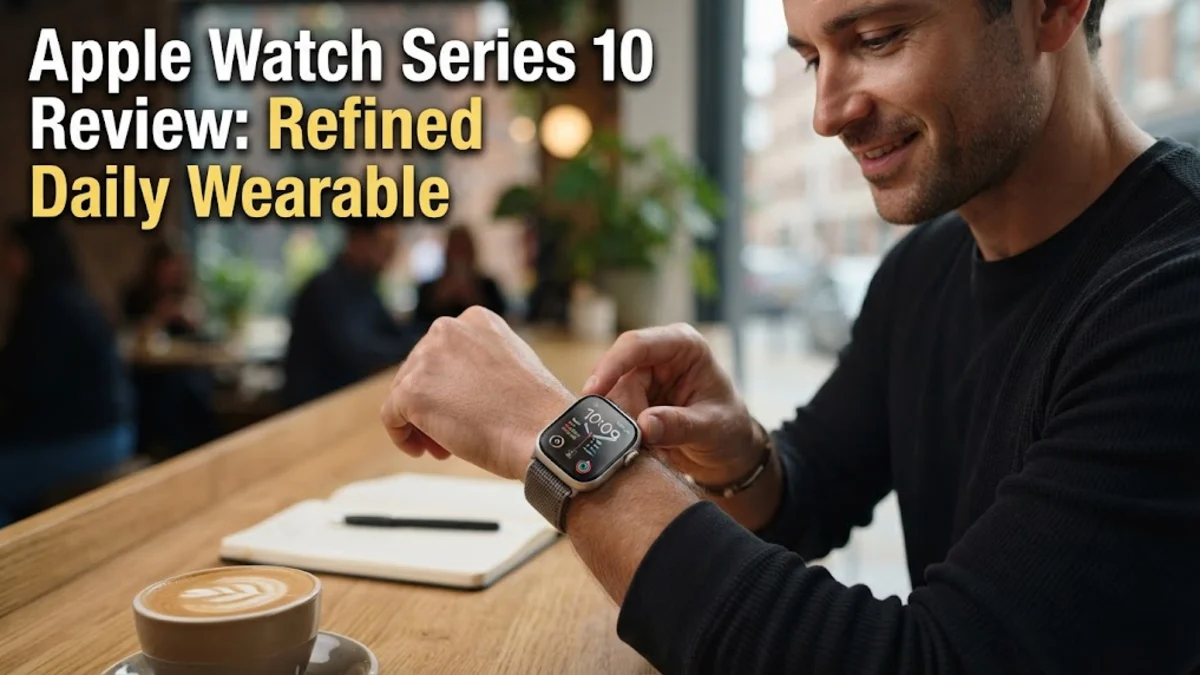
Overview
The Apple smartwatch 10 represents the latest stage in the evolution of wearable technology, serving as a sophisticated hub for your health data, notifications, and ecosystem control. Apple has approached this generation with a focus on refinement rather than radical reinvention, targeting users who demand a device that blends high-end performance with premium aesthetic sensibilities. At its core, this watch is designed to reduce the friction of daily life by offloading essential tasks from your smartphone to your wrist, providing a more discreet and responsive interface for staying informed. By integrating tightly with the broader Apple ecosystem, the smartwatch 10 functions not just as an accessory but as a central component of an interconnected hardware strategy that includes your phone, Mac, and smart home devices. Whether you are aiming to track a workout, monitor your sleep health, or manage your calendar while on the go, this model aims to provide the most fluid user experience currently available in the wearable market.
Design and Build
The design philosophy behind the Apple smartwatch 10 is centered on ergonomics and clarity. Apple has managed to reduce the physical depth of the device compared to its predecessors, resulting in a profile that sits closer to the skin and snag-less against clothing. This thinness is not merely a cosmetic improvement; it enhances the comfort of wearing the watch for extended periods, especially during sleep. The materials used, ranging from aerospace-grade aluminum to high-grade titanium, provide a robust structure that resists the daily bumps and scrapes that a wearable is naturally exposed to. The display features an edge-to-edge OLED panel that maximizes every millimeter of available space, with peak brightness levels that make it effortlessly readable even under the intense glare of direct midday sun. The digital crown remains the primary tactile input, offering precise, mechanical feedback that feels vastly more intentional than standard touch-only interfaces. Furthermore, the quick-release mechanism for bands ensures that users can transition from a silicone sport band for high-intensity training to a professional-looking metal link bracelet for the office in mere seconds without requiring any specialized tools.
Key Features and Performance
Under the hood, the Apple smartwatch 10 utilizes the latest generation system-in-package, which balances power efficiency with raw processing speed. Applications launch nearly instantaneously, and the watch maintains a consistent frame rate even during heavy multitasking, such as navigating complex GPS maps while simultaneously playing music. One of the most notable improvements is in the sensor array, which provides more granularity in health monitoring. The blood oxygen sensor, heart rate monitoring, and advanced accelerometer work in concert to offer a holistic picture of your physical condition. During exercise, the software provides real-time feedback on zones, cadence, and power, which is particularly beneficial for those moving beyond casual jogging into more structured training. The watch also excels in passive safety features; automatic fall detection and crash detection are built-in, providing a necessary layer of reassurance for hikers, cyclists, and the elderly. The software experience is bolstered by the latest version of watchOS, which introduces smarter widgets that surface contextually relevant information—like a weather update before a morning commute or a boarding pass when arriving at an airport—without you needing to hunt through a menu of apps.
Who It Is For (and Who Should Skip It)
This watch is the definitive choice for the dedicated Apple user. If your digital life is anchored by an iPhone, the experience is unparalleled in terms of convenience and stability. You benefit from automatic syncing of notifications, music libraries, and payment cards, creating a seamless environment where your devices communicate without manual interference. It is an ideal companion for the busy professional who needs to triage emails and calls without distraction, or the fitness enthusiast who values a clean, easy-to-read interface for tracking daily movement goals. However, the device is explicitly not for users of other smartphone platforms. Since there is no cross-compatibility with Android, the requirement to own an iPhone makes this a non-starter for a large segment of the population. Additionally, if you prioritize ultra-long battery life, such as being able to go a week or more without a charge, you may find the daily requirement to charge this watch frustrating. Competitive athletes training for multi-day events or ultra-marathons who need specialized, recovery-heavy metrics might also find that dedicated sports-specific watches from brands like Garmin offer a more focused toolset for their specific, demanding use cases.
Alternatives Worth Considering
Navigating the current market requires balancing your ecosystem requirements with your functional priorities. For those who enjoy the Apple design language but want different features, the entry-level SE models offer a lower price point by sacrificing advanced health sensors like ECG or blood oxygen. If you operate within the Android ecosystem, the Samsung Galaxy Watch 8 provides a highly competitive suite of features, including a rotating bezel for navigation which many users find more satisfying than the digital crown. For those who view their wearable as a professional piece of sports equipment first and a smartwatch second, the Garmin Forerunner 965 is a superior choice, boasting weeks of battery life and a dedicated focus on physiological training load and recovery data. The Google Pixel Watch 3 is another relevant alternative for those who prefer the deep integration of Google Maps, Assistant, and Wallet, offering a distinctively rounded design that appeals to users seeking a more traditional timepiece aesthetic.
Final Verdict
The Apple smartwatch 10 is a mature, highly capable device that excels at being an indispensable daily companion. Its strengths lie in its reliability, the ease of its software ecosystem, and its refined, modern design. While the battery life remains a constraint that demands routine planning, the trade-off is a high-resolution, responsive, and incredibly feature-rich display that is difficult to match elsewhere. It does not reinvent the wheel, but it polishes the rotating mechanism to near perfection, making it the most sensible upgrade for current users of older models and a compelling entry point for those entering the Apple ecosystem. By consistently delivering high performance in a package that feels natural on the wrist, it reinforces why it remains the benchmark for the smartwatch category.