Overview
In the rapidly evolving landscape of home automation, the TP-Link Tapo P210M serves as a bridge between legacy home electronics and the modern, unified smart home. The most significant advancement in the smart home industry recently has been the adoption of the Matter protocol, an interoperability standard designed to end the 'walled garden' era of smart devices. The Tapo P210M is built specifically to leverage this standard, allowing it to function flawlessly across major ecosystems such as Apple Home, Google Home, Amazon Alexa, and Samsung SmartThings. While many smart plugs on the market rely on proprietary cloud services that can fail or become obsolete, this device focuses on local connectivity. This means that when you trigger your lights to turn on or set a timer for a coffee maker, the command is processed within your local network. This shift toward local-first architecture is not just a technical change; it significantly improves the reliability, speed, and privacy of your home environment. By choosing the P210M, you are effectively future-proofing your minor appliance management without having to bet on a single company's long-term software support.
Design and Build
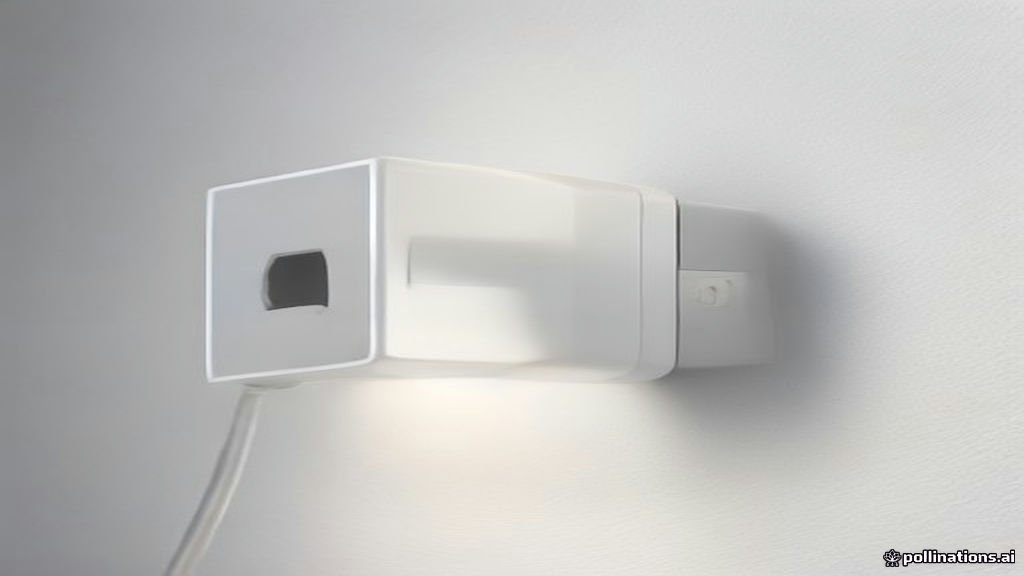
The design philosophy behind the Tapo P210M is one of utilitarian efficiency. Smart plugs often suffer from 'port hogging,' where the physical casing is too wide, preventing you from using the other outlet on a wall plate or power strip. The P210M addresses this with a slim, minimalist form factor that stays well within the footprint of a standard electrical outlet. The outer shell is composed of a durable, heat-resistant white polycarbonate, which matches the aesthetic of standard wall plates found in most homes. On the side of the unit, you will find a physical toggle button. While most users will rely exclusively on voice commands or app triggers, this manual button is a critical 'fail-safe.' If your Wi-Fi drops, the internet is down, or you simply do not have your phone handy, you retain full, physical control of the connected appliance. The LED status light on the front is a masterclass in subtlety; it provides just enough information to indicate connectivity and power status without illuminating a dark room, making it an excellent choice for bedrooms where light pollution from status LEDs can be a major annoyance. The internal relay mechanism is rated for thousands of switching cycles, ensuring that even with daily usage, the plug remains functional for years.
Key Features and Performance
The P210M shines in its execution of the Matter standard. Traditionally, setting up smart home devices meant downloading manufacturer-specific apps, creating cloud accounts, and wrestling with firmware updates before the device would even appear in your voice assistant's library. With the Tapo P210M, the experience is radically different. Because it utilizes Matter over Wi-Fi, you can use the native home application on your phone—be it Apple Home or Google Home—to scan the QR code printed directly on the device. This 'out-of-the-box' compatibility minimizes the setup time to under sixty seconds. Beyond ease of installation, the performance is remarkably stable. During standard operation, the plug maintains a persistent connection to the local router. Unlike cheaper alternatives that might disconnect after a few hours of inactivity, the P210M remains in a 'ready' state. The companion Tapo app provides a secondary layer of utility, offering advanced scheduling features that are sometimes missing from basic ecosystem apps. For example, you can set 'Away' modes that create a randomized schedule, turning lights on and off to give the appearance of an occupied home. Furthermore, the energy monitoring feature allows you to see exactly how much power your lamps, dehumidifiers, or fans are consuming, providing transparency that can help reduce your overall electricity bills over time.
Who It Is For (and Who Should Skip It)
This device is specifically designed for the 'set-it-and-forget-it' user. If you are a renter, the P210M is an invaluable tool because it allows you to automate your living space without needing to change light switches or perform any electrical work. It is particularly well-suited for college students, apartment dwellers, or anyone who wants a low-stakes introduction to home automation. It is also an excellent gift for non-technical family members, as once it is configured, the voice control via Alexa or Google Assistant works intuitively. However, there are scenarios where this is not the right choice. If you are looking to control high-power appliances—such as electric space heaters, portable air conditioners, or large-capacity microwave ovens—you must skip this model. The P210M is designed for standard low-wattage household appliances. Attempting to draw too much current through a standard smart plug can lead to overheating and potential safety risks. Additionally, if you are a power user who requires advanced automation logic based on complex environmental sensor triggers (like temperature or motion), you might find the native software a bit limited compared to professional-grade Z-Wave or Zigbee setups that require a dedicated hub.
Alternatives Worth Considering
When shopping for smart plugs, the competition is fierce. The Eve Energy smart plug is perhaps the most direct alternative, particularly if you are fully committed to the Apple HomeKit ecosystem. The Eve plug often features a more robust build and a slightly more premium feel, but it typically commands a higher price tag. If you are already invested in the TP-Link brand ecosystem, the P110M is a very close relative. The primary difference is often down to specific aesthetic preferences or minor differences in internal relay design, so choosing between the P210M and P110M often comes down to which one is on sale at the moment. For those who do not care about the Matter standard and just want the cheapest possible way to turn a lamp off and on, older Kasa-branded plugs remain popular. These plugs have years of proven reliability, but their reliance on proprietary cloud protocols makes them less 'future-proof' than the P210M. When evaluating these, consider whether you plan to stick to one ecosystem or if you prefer the flexibility to switch between platforms in the future, as that is the main reason to pay the slight premium for Matter-certified hardware like the P210M.
Final Verdict
The TP-Link Tapo P210M is a triumph of consistency. In the world of smart home tech, where features are often overstated and software is frequently buggy, the P210M stands out by doing exactly what it promises. It is a reliable, unobtrusive piece of hardware that simplifies the act of controlling your appliances. Its strengths lie in its adherence to universal standards, its fast and snappy response time due to local processing, and its ability to play nice with every major smart home assistant on the market. While it won't handle your heavy-duty industrial appliances or offer the granular automation depth of a professional home controller, it covers 95% of the needs for the average modern household. It represents an excellent investment for those who value stability and interoperability above all else. By removing the friction from smart home setup, TP-Link has created a product that actually delivers on the promise of making life easier, not more complicated. For anyone looking to start or expand their smart home, the P210M is a top-tier recommendation.