Overview
In the rapidly evolving landscape of portable power, Goal Zero has long been considered the industry pioneer. The Yeti 1000X represents the core of their mid-range lineup, designed to balance portability with significant energy storage. As we move through 2026, the market has become saturated with cheaper alternatives, yet Goal Zero maintains a loyal following by focusing on robust engineering and a modular ecosystem. This unit is positioned as a versatile workhorse, capable of powering everything from essential medical devices like CPAP machines to small kitchen appliances during a power outage. Our research into manufacturer specifications and expert field reports indicates that while it may not be the fastest-charging unit on the shelf, its power delivery is among the most stable in its class. For shoppers in the United States, Canada, and the United Kingdom, the Yeti 1000X serves as a reliable middle ground between small handheld power banks and massive, wheeled home backup systems.
Design and Build
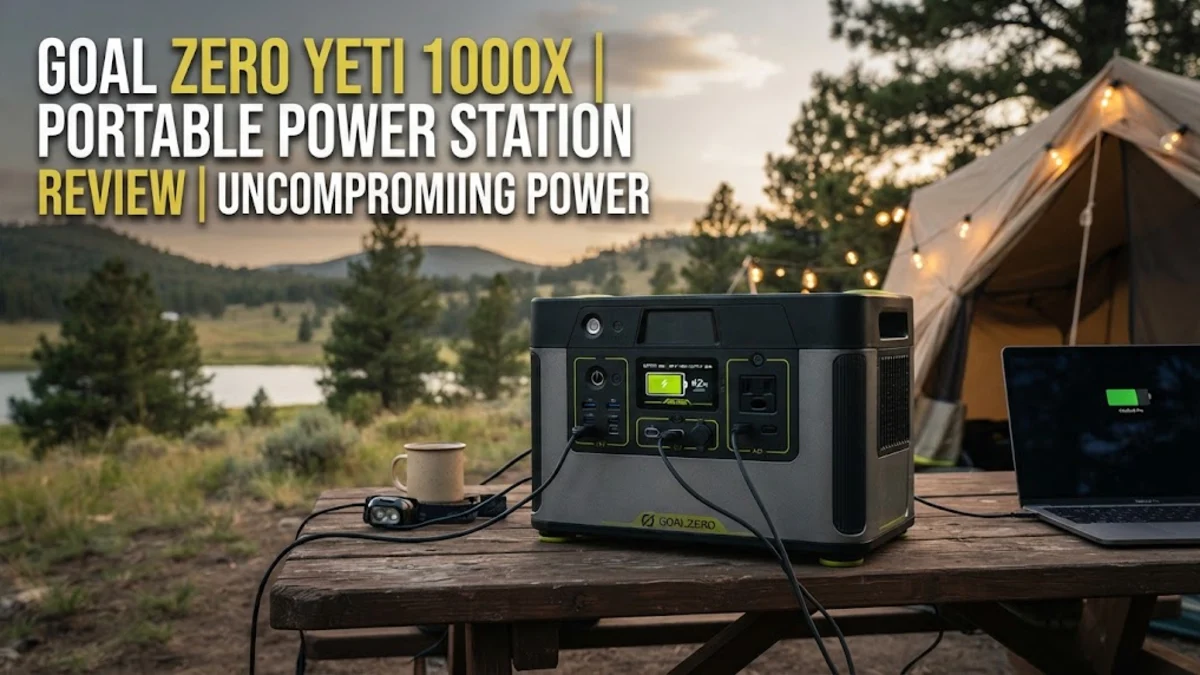
The first thing you notice about the Yeti 1000X is its industrial aesthetic. Unlike the plastic-heavy designs of many budget competitors, Goal Zero utilizes a combination of high-impact polymers and an aluminum chassis that feels remarkably solid. The signature silver and forest green color scheme is instantly recognizable. One of the standout design features is the recessed top, which serves as a convenient storage area for cables and smaller devices, though it lacks the integrated wireless charging pads found on some newer rivals. The handles are fixed and built into the frame, providing a secure grip for two-handed carries, which is necessary given its weight of nearly 32 pounds. The front panel is logically laid out, with ports grouped by type: 12V DC, USB, and AC. A clear, backlit LCD provides real-time data on input and output wattage, as well as an estimated time to empty or full based on the current load. This level of transparency is vital for users managing limited power in remote locations. The build quality extends to the internal components, where the unit features a sophisticated multi-stage protection system to prevent over-voltage, short-circuiting, and overheating.
Key Features and Performance
The heart of the Yeti 1000X is a 983Wh Lithium-ion (NMC) battery pack paired with a 1500W pure sine wave inverter. This inverter is capable of handling surges up to 3000W, allowing it to start power-hungry tools or appliances with compressors, such as portable refrigerators. In performance reviews, experts often praise the 12V regulated port, which maintains a consistent 13.6V output even as the battery depletes. This is a critical feature for users of 12V portable fridges, as many competitors allow the voltage to drop, causing the fridge to shut off prematurely. For digital enthusiasts, the USB-C Power Delivery port provides 60W of high-speed charging, sufficient for most modern laptops and tablets without needing a bulky AC adapter. However, the charging speed of the unit itself is where it shows its age. Unlike newer units from EcoFlow that can charge from 0 to 80 percent in an hour using internal charging hardware, the Yeti 1000X relies on an external 120W power brick. This results in a full charge time of approximately 9 hours from a standard wall outlet. You can decrease this time by purchasing a larger 600W power supply separately, but that adds to the total cost. Solar performance is a high point, with a built-in MPPT controller that maximizes efficiency when connected to Goal Zero’s Boulder or Nomad panels. Under ideal conditions, it can accept up to 600W of solar input, which is impressive for a unit of this capacity.
Who It Is For (and Who Should Skip It)
If you are a van-lifer, a frequent camper, or someone who needs reliable power for a CPAP machine during emergencies, the Yeti 1000X is a strong contender. Its high-quality 12V regulation and pure sine wave AC output make it safer for sensitive electronics than many low-cost alternatives found on Amazon. It is also an excellent choice for professional photographers or videographers who need to charge drone batteries and laptops in the field. However, it may not be the best fit for the casual user who only needs power for a single weekend camping trip a year; in those cases, a smaller and lighter 500Wh unit would suffice. Furthermore, if you prioritize the absolute longest lifespan possible, you might want to skip this model. The NMC battery chemistry is rated for approximately 500 charge cycles to 80 percent capacity. While this is plenty for several years of moderate use, users who plan to discharge the unit daily might prefer a station with Lithium Iron Phosphate (LFP) chemistry, which typically offers over 3,000 cycles. Finally, if you need a unit that can be charged quickly in the hours before a storm hits, the slow stock charging speed of the 1000X might be a deal-breaker.
Alternatives Worth Considering
When comparing the Yeti 1000X to its closest rivals, the Jackery Explorer 1000 v2 is often the first alternative mentioned. The Jackery is generally lighter and more user-friendly for beginners, though it lacks the sophisticated 12V regulation and professional port selection of the Goal Zero. Another major competitor is the EcoFlow DELTA 2. The DELTA 2 offers significantly faster wall charging and utilizes LFP battery chemistry, making it a more modern choice for those who value speed and longevity. However, many users find the EcoFlow fans to be louder and the build quality slightly less rugged than the Yeti. For those on a tighter budget, the Bluetti AC180 provides a similar power output with a faster internal charger, though its interface and app support are often cited as less intuitive than Goal Zero’s ecosystem. Each of these alternatives has shifted toward LFP batteries, which puts pressure on Goal Zero to compete on price rather than just raw cycle life.
Final Verdict
The Goal Zero Yeti 1000X is a premium, well-engineered power station that prioritizes reliability and clean power delivery over the latest industry gimmicks. While the move toward LFP chemistry in the wider market makes the Yeti's 500-cycle rating seem low, the unit's actual build quality and the support of the Goal Zero ecosystem remain top-tier. It is a tool for those who value a "buy it once" philosophy and need a power source that won't fluctuate when powering sensitive medical or professional equipment. If you can overlook the slower out-of-the-box charging and the slightly heavier weight, the 1000X is a proven performer that continues to hold its own in 2026. It stands as a testament to the idea that sometimes, consistent performance and a robust port selection are more important than being the fastest to reach a full charge.