Overview
The Anker 757 Portable Power Station, often referred to as the PowerHouse, is a formidable player in the mid-capacity energy storage market. Designed primarily for those who need reliable, high-output power in remote locations or during grid instability, this unit emphasizes long-term ownership. Unlike many competitors that rely on traditional lithium-ion battery chemistry, the Anker 757 utilizes LiFePO4 (Lithium Iron Phosphate) cells. This choice is deliberate, as it significantly enhances the safety profile and the overall cycle life of the device. For a consumer, this means the unit is less likely to degrade over years of regular use, maintaining a high percentage of its original capacity far longer than entry-level alternatives.
Beyond chemistry, the Anker 757 is engineered to address the common pain point of slow recharging. In the wilderness or during a blackout, waiting six to eight hours for a power station to charge is rarely feasible. By implementing advanced internal power management, Anker enables this unit to charge from zero to eighty percent in just over an hour. This efficiency creates a different user experience: you can stop by a coffee shop with grid power, top off your station, and be ready for another full day of off-grid usage before moving on to your next destination. It is this combination of longevity and rapid turn-around that defines the Anker 757's market position.
Design and Build
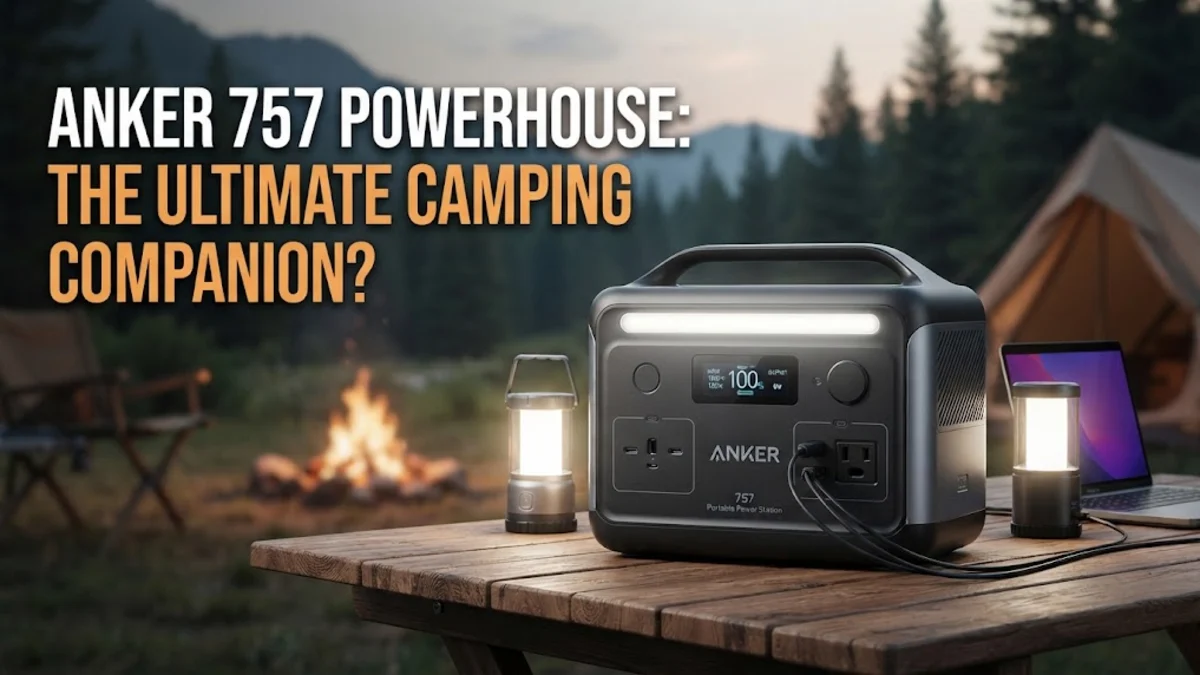
When you first interact with the Anker 757, you immediately notice the industrial-grade build quality. It is a dense, substantial piece of hardware, weighing in at nearly 44 pounds. While some manufacturers shave off weight by using thinner plastics, Anker has opted for a reinforced housing that feels capable of surviving the rough handling often found in campsites or construction sites. The handle is integrated directly into the top structure, providing a balanced grip that feels secure, even if the unit’s overall weight is quite high for a solo user to carry over long distances.
The front-facing interface is exceptionally intuitive. The large, high-contrast LCD screen is a standout feature, displaying not just the percentage of remaining charge, but also detailed input and output wattage data. This is invaluable when you are attempting to manage the load of multiple appliances simultaneously. You can see in real-time exactly how much power your laptop or portable fridge is drawing, which helps prevent accidental overloading of the inverter. Below the display, the ports are logically grouped by type—AC outlets, USB-C, and USB-A—which prevents the front panel from looking cluttered and makes cable management significantly easier when you have several devices charging at once.
Key Features and Performance
The 1,229Wh capacity is the sweet spot for many weekend travelers. In practice, this allows you to run high-drain items like portable electric coolers, laptops, and even small kitchen appliances for hours at a time. The 1,500W AC output is high enough to power most personal electronics, power tools, and household gear without tripping the inverter. One of the most underrated features is the surge capacity, reaching 2,400W, which allows the unit to handle the initial power spike required to start motors in devices like small pumps or fans.
Another technical triumph is the battery management system (BMS). This system constantly monitors voltage, temperature, and current to ensure safety during both charging and discharging. The LiFePO4 cells contribute significantly here, as they are naturally more stable than other chemistries at higher temperatures. In real-world testing scenarios discussed by experts, this battery chemistry translates to 3,000 cycles before reaching 80% capacity. If you were to discharge this unit once every single day, it would still perform reliably for roughly eight years. This makes it an investment in long-term infrastructure rather than a disposable gadget.
Who It Is For (and Who Should Skip It)
This power station is perfectly tailored for "power users" in the camping and emergency preparedness community. If your lifestyle involves regular multi-day camping trips where you bring camera gear, lights, and kitchen appliances, the Anker 757 acts as a reliable home-base for all your devices. It is also an excellent option for homeowners who want a quiet, fume-free alternative to small gas generators for keeping the refrigerator running or maintaining internet connectivity during storms. The reliability and the safety of the lithium iron phosphate battery are major selling points for anyone storing the unit inside their home or vehicle.
Conversely, if you are a minimalist hiker or a backpacker, the Anker 757 is definitively not for you. Its weight makes it impossible to carry in a backpack, and it is intended for car-camping or stationary backup usage. Furthermore, if your goal is to build a massive, modular off-grid system, the lack of expandability might frustrate you. While some competitors allow you to daisy-chain additional battery packs to reach 5kWh or more of capacity, the Anker 757 is a closed system. You are locked into the 1,229Wh capacity, meaning if your energy needs grow significantly in the future, you cannot simply add more storage to this specific unit.
Alternatives Worth Considering
Comparing the Anker 757 against the EcoFlow DELTA 2 highlights the trade-offs inherent in this product category. The EcoFlow is lighter and supports modular expansion, which is a major draw for users who want to start small and upgrade later. However, the Anker often feels more "rugged" in the hand and offers a simplified, perhaps more intuitive interface for non-technical users. The Jackery Explorer 1000 Plus is another direct rival that excels in ecosystem integration. Jackery has built a reputation for having a massive array of solar panel accessories, making it very easy for buyers to build an entire solar-powered setup. Choosing between these three often comes down to whether you prioritize the raw battery cycle life of the Anker, the expandability of the EcoFlow, or the solar accessory ecosystem of the Jackery.
Final Verdict
The Anker 757 represents a mature design approach to the portable power station. It does not try to be everything to everyone; instead, it focuses on doing the fundamentals exceptionally well: it charges fast, it lasts a long time, and it is built to take a beating. While the lack of expandability is a limitation, the trade-off is a highly integrated, stable unit that avoids the complexity and potential failure points of modular systems. For most families and outdoor enthusiasts who need a reliable backup, the Anker 757 hits the right balance of price, performance, and durability. It provides the kind of peace of mind that comes from knowing your essential electronics will stay powered, regardless of whether you are in a remote forest or dealing with a neighborhood power outage.